
What luxury packaging design actually means. A few months ago I had a discovery call with the loveliest founder. Beautiful luxury fragrance. Genuinely incredible product. The kind of perfume you smell once and remember for a week.
Then she sent me her packaging.
The outer box looked like the carton my €30 collagen shots come in. Not a €250 bottle of perfume. Not even close.
That call is the entire reason I’m writing this post. Because if you’re a beauty, skincare, fragrance or wellness founder thinking about premium packaging design, there’s one thing nobody on Pinterest is going to tell you: your packaging has to match the price you want to charge. If it doesn’t, you don’t have a premium brand. You have a great product in cheap clothes.
Let’s get into it.
What “Premium” Actually Means in Packaging Design
Premium isn’t a font. It’s not a colour palette. It’s not “minimalist with a serif logo.”
Premium is perception. And perception is built from the substrate up.
When someone holds your box, three things happen in the first two seconds:
- They feel the weight and texture of it
- They register the print quality
- They decide, subconsciously, what this is worth
That decision happens before they’ve read your label. Before they’ve smelled the product. Before they’ve checked the ingredients. The packaging has already told them whether they’re holding something special or something ordinary.
If you want to charge €250 for a fragrance, your box needs to do €250 of work before the bottle is even out.
The Temu Label Problem (A Real Story)
I once ordered a “handmade luxury fragrance” from a brand that had been popping up on my Instagram. The whole feed was artisan this, small batch that, beautiful slow shots of the product on linen.
The bottle arrived with a printed sticker. Just a sticker. Slapped on slightly wonky.
Their Instagram said luxury. The label said Temu.
That’s the gap that kills brands. Founders pour months into the product and weeks into the Instagram aesthetic, then DIY the actual packaging and wonder why the conversion rate is rough. Your perception has to match your packaging. If your feed promises a wow moment and your unboxing delivers a sticker, customers feel it. They might not articulate it. They just won’t reorder.
The brands you keep the boxes from? Apple. Glossier. Aesop. Diptyque. They’ve all done the same thing: invested in the unboxing as part of the product. You’re never throwing out the MacBook box. That’s not an accident. That’s strategy.
If Paper Had a Word Like Mouthfeel
Substrate is the most underrated decision in beauty packaging.
The €250 perfume founder I mentioned? Her bottle was gorgeous. The juice was extraordinary. But the outer carton was a thin, lightweight stock with a flat finish. It felt like pharmacy packaging. Cheap. Disposable.
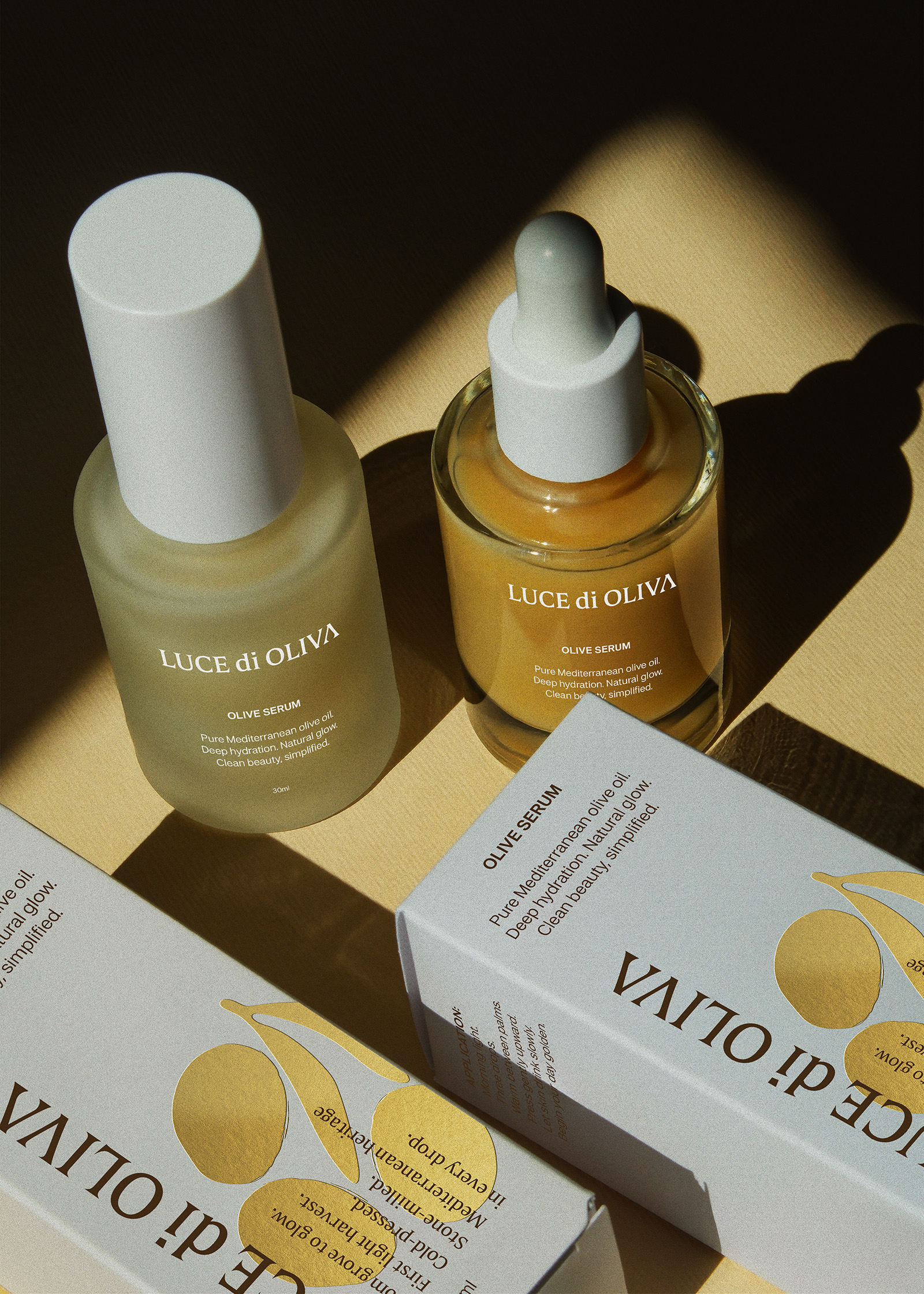
If paper had a word like mouthfeel, that would be it. A premium box has weight. It has texture, resists when you open it. Makes a sound when it closes. You can feel the foil. You can feel the deboss. The whole thing communicates expensive before you’ve even seen the design.
Cheap stock with beautiful artwork on it still feels cheap. You can’t out-design bad paper.
This is why every premium beauty brand worth its margin is using:
- Heavier weight stocks (300gsm and up for outers)
- Uncoated or soft-touch finishes for a tactile feel
- Foil stamping in metallic or pigment foils
- Embossing or debossing for dimensional detail
- Specialty papers (cotton, recycled with visible fibre, coloured-through stocks)
None of this is cheap. Which brings us to the next part.
Show Me the Money: The Filter I Use on Every Discovery Call
When a beauty or wellness founder books a discovery call with me and tells me they want premium packaging, my first question is some version of: are you actually willing to invest in printing?
Because here’s the brutal truth most agencies won’t say out loud.
Foils cost money. Embossing costs money. Luxury paper costs money. A thank you card costs money. The extra mile costs money.
I can design you the most beautiful packaging system in the world, but if you’re going to print it on the cheapest stock with no finishes because the print quote made you flinch, you’ve wasted your design budget. The packaging will look like every other beauty brand at your price point. Worse, it’ll look like you’re trying.
A real premium packaging project has two budgets sitting next to each other from day one: design and print production. If you’ve only budgeted for design, you don’t have a premium project. You have a design project with a sad print run at the end of it.
The founders who get the best results from me are the ones who say “yes, I’ve allocated for foils, I’ve allocated for special stock, I want the unboxing to feel like a moment.” Those are the brands that end up on someone’s bathroom shelf for a year, getting reposted on Instagram by happy customers who can’t help themselves.
Typology vs The Ordinary: Same Category, Different Strategy
Let’s get specific.
Typology and The Ordinary are both minimalist skincare brands. Both successful. Both selling serums and actives at accessible price points. From a category standpoint, they’re playing the same game.
Open them up though, and the experience is completely different.
The Ordinary is matter-of-fact. The packaging tells you exactly what’s inside. Niacinamide 10% + Zinc 1%. Done. It feels like a lab supply. It works for them because their whole positioning is “skincare without the markup.” The packaging proves the point. No frills, no luxury tax, just the formula.
Typology is doing something completely different. Same minimalist instinct, but the execution feels like a ritual. Amber glass bottles. Considered typography. Soft, warm label design. It’s not super expensive, but it sits on your bathroom counter and makes you feel like you’re doing something good for your health (even though you should probably just drink a glass of water).
Both brands are minimalist. Only one feels premium. The difference isn’t budget. The difference is strategy. Typology decided their packaging needed to feel like a moment. The Ordinary decided theirs needed to prove a point.
When you’re working on premium packaging for a beauty or wellness brand, this is the question you have to answer first: what experience do you want someone to have when they pick this up? Until you know that, no amount of foil stamping is going to save you.
What Beauty Founders Get Wrong About Premium Design
A few patterns I see on repeat.
“Premium just means minimal”
No. Premium means considered. Some of the most premium beauty packaging in the world is maximalist. Augustinus Bader is restrained. Sisley is decorative. Both feel premium because every decision is intentional. Minimalism without intention is just empty.
“We’ll fix the packaging in v2”
You won’t. Your launch packaging is the photo on every retailer page, every PR drop, every founder interview, every Instagram post for the next twelve months. You don’t get to retake first impressions. Get it right the first time, even if it costs more than you wanted to spend.
“We can use the same packaging for Amazon and DTC”
Maybe. But probably not. Amazon shoppers see your packaging as a thumbnail first. The design has to read at 200 pixels. DTC shoppers see your packaging in person, in their hand. The design has to reward closer inspection. Same brand, same product, but the packaging often needs different priorities depending on where it’s selling.
“I’ll do the design myself and just hire a printer”
This is the path to the Temu sticker. Print files are not a side quest. The difference between packaging that ships well and packaging that arrives bent, mis-aligned and with the foil registering in the wrong place is a designer who knows how to set up files for production and how to talk to printers. You can DIY the brand mood board. You cannot DIY the dieline.
How to Actually Brief a Premium Packaging Designer
If you’re a beauty or wellness founder getting ready to invest in premium packaging design, walk into the call with these answers ready:
- What price point are you charging, and what does the customer expect at that price? This is the perception benchmark.
- Where is the product selling? DTC, Amazon, retail shelf, all three? Each one demands different design priorities.
- What’s your total print budget, separate from design? Be honest. If you don’t have one yet, that’s the first conversation to have.
- What’s the unboxing experience supposed to feel like? Calm? Decadent? Clinical-but-warm? Specific words help.
- Who is this customer and what other premium brands do they already buy? This is your competitive set, and it’s where your packaging needs to belong.
If your designer doesn’t ask these questions, they’re not doing strategy. They’re doing decoration. Big difference.
The Studio Stoked Approach to Premium Beauty Packaging
I’m a CPG packaging designer specialising in beauty, skincare, supplement and wellness brands. Strategy first, every time. Then visual identity. Then packaging across the full system, SKUs, secondary packaging, unboxing inserts, retailer-ready files.
I work directly with your printer, check proofs. Push back on your worst ideas (gently, mostly). I tell you when the cheaper paper is going to undo six months of brand work. I tell you when your packaging is doing too much and when it’s not doing enough.
The brands I work with don’t want generic. They want to look like the premium brand they’re charging premium prices to be.
If that’s you, here’s how to get started:
- Pre-launch and want it done properly the first time: The Signature Service. Brand strategy, visual identity and full packaging system. Starts at $9,000 USD.
- Already launched and your packaging isn’t pulling its weight: Shelf Shock. One hour diagnostic, written feedback within 48 hours. $400 USD.
- Not sure what you need: Book a discovery call. Thirty minutes, no pitch. You’ll know if it’s a fit before we hang up.
You can also email me directly at marta@studiostoked.com
TL;DR
Premium packaging design for beauty and wellness brands is not about a clever logo or a trendy colour palette. It’s about perception matching price. Paper matching positioning. Print investment matching design intention. The brands that get this right end up on bathroom shelves for years. The brands that don’t end up with great products in cheap clothes, wondering why their conversion rate is soft.
Pick the substrate before you pick the typeface. Budget for print before you fall in love with the foil. Hire a designer who’ll tell you when your idea is wrong and work with your printer until the box on the shelf looks exactly like it should.
That’s the difference between premium and pretending.
+ view the comments