Finding a packaging designer is easy. The right packaging designer, the one who won’t quietly torch your launch is slightly harder.
There are a lot of people on the internet who will put your logo on a pouch, call it packaging design, send you a Dropbox link, and wish you luck. Some of them are very nice. Some of them will prepare your print files in RGB and not mention it until 10,000 units arrive looking nothing like the screen.
This is how you tell the difference before you hand over your money.
In 15 years of doing this I’ve seen an olive oil sell out in three weeks with no ads, a dog treat brand double its retail price, and exactly zero successful launches built on a mood board.
The Reason Your Last Designer Didn’t Work Out
(Even if you haven’t hired one yet, stay with me.)
The most common reason founders come to me after a bad experience is not that the work looked terrible. It’s that nobody did the strategy.
They got a mood board. Maybe a Pinterest board with some vibes and a colour palette and the word “elevated” used twice. And then the designer opened Illustrator and started making things look nice.
Here’s the thing about a mood board: it is not a strategy. It is a collection of things you personally like. And you bless you are not your customer.
A packaging designer’s job is not to execute your vision. It’s to find the gap between what you think your customer wants and what your customer actually reaches for. If your designer’s first move is to ask you what colours you like, that’s your first red flag.
The Question That Separates Designers From People With Canva Pro
Ask any packaging designer you’re considering this:
“How do you handle print production?”
Then watch what happens.
A decorator will tell you they send print-ready files. A designer will tell you about Pantone references, physical proofs, substrate testing, and the fact that a colour that looks gorgeous on screen can die completely on kraft paper.
I once adjusted a sage green wine label by 5% yellow and it was a completely different colour. These are not small details. These are the things you discover at 3am before a print run or you discover them when the units arrive and something is very, very wrong.
And here’s the kicker: if your designer is preparing files in RGB for a print job, you won’t know until it’s too late. Founders don’t know to ask this because they don’t know what they don’t know about print.
Now you do. Ask it.
What print management actually includes →
Your Pinterest Board Is Not the Brief
(I say this with love.)
You have opinions. Strong ones. You’ve been living with this product for months, maybe years. You know what you want it to look like. You have a whole folder saved.
Here’s the thing nobody says to your face: you are not your customer.
I had a founder who came to me absolutely certain his nut-free protein bar was for gym bros. Big guys. High protein. The whole thing.
It wasn’t.
It was for the mum driving to sports practice with an allergic kid in the back seat, EpiPen in her bag, who will not risk it for a bar that says “may contain traces.” She doesn’t want edgy. Or want fun. What she wants is certainty before she’s finished reading the front of the pack.
We designed for her. It sold.
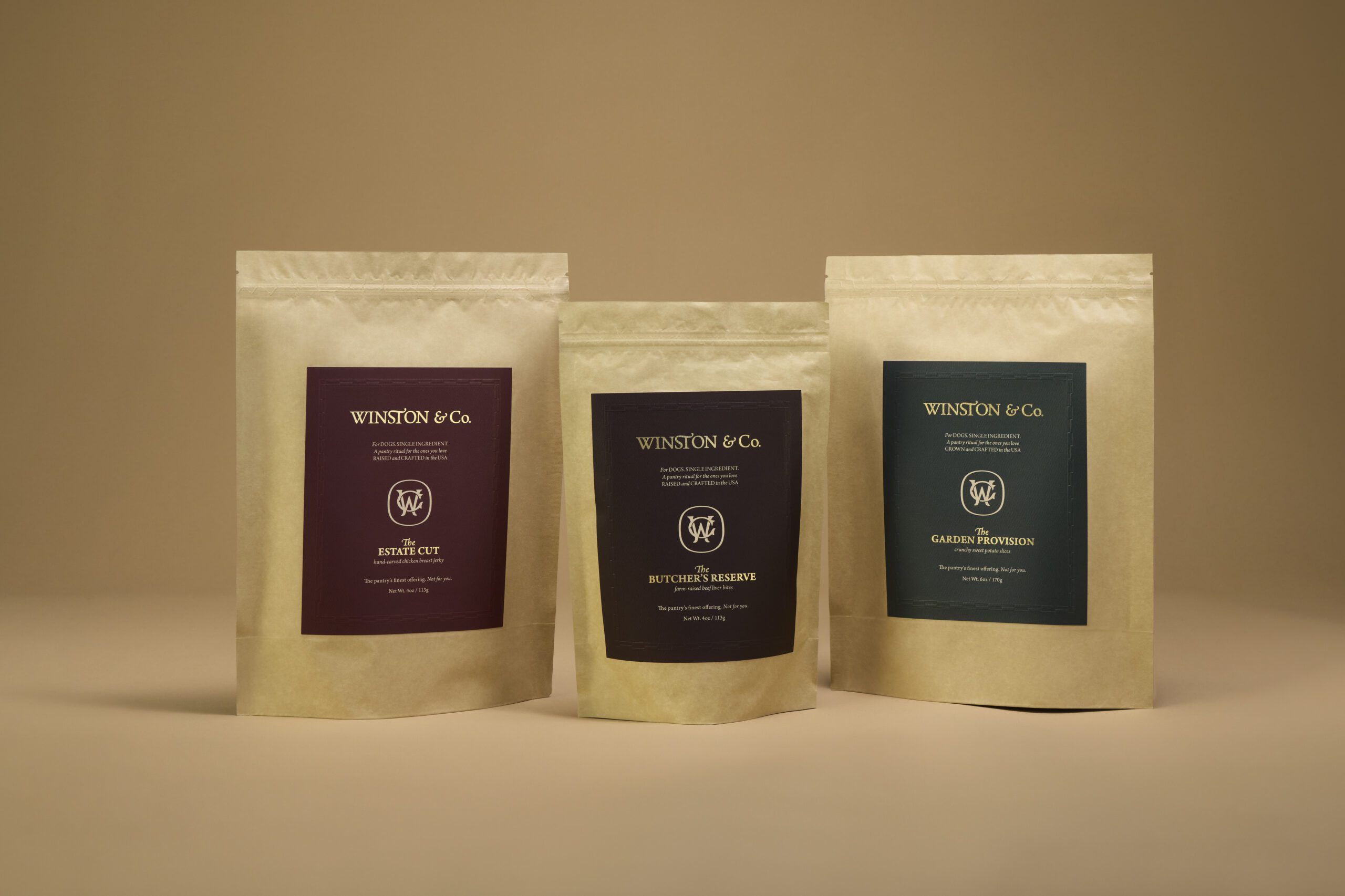
Then there’s Winston and Co. Premium dog treats. The brief could have been “make it look premium.” Instead we asked: who is actually buying this?
Not someone who throws treats on the floor as a training reward. Someone who loves their dog the way a certain type of person loves their dog intentionally, extravagantly, the same way they choose their olive oil and their ceramics and their coffee. The Flamingo Estate buyer. The person who wants something beautiful enough to display.
So we designed for that person. The result: packaging so considered that customers started putting empty pouches on their Christmas mantels. Influencers photographed them as decor. Not because anyone asked them to. Because the packaging earned it.
That’s not a design decision. That’s a strategy decision that design executed.
You cannot Pinterest-board your way to that insight. ChatGPT is a free yes man. You pay a strategist to find the gap.
A good packaging designer will tell you when your instincts are wrong. If yours never has, you haven’t hired a designer. You’ve hired an expensive yes man.
See the Winston and Co case study →
The Cheaper Quote Will Cost You More
Forget the quotes for a second. When you’re choosing between two designers, compare these instead.
One. The vibe check.
You are going to spend two months inside your brand with this person. There will be opinions, pushback, printer drama, and at least one moment where you’re not sure about the first concept and you need someone you trust to talk you through it.
If you don’t like them, none of that works.
Trust your gut. It already knows.
Two. The actual deliverables.
Not “packaging design.” Specifically. Is strategy included? How many concepts? How many rounds of revisions? Do they handle print or send files and disappear? Get this in writing. Every single thing.
Three. How they made you feel.
Did they make you feel like they already understood your brand? Like they’d been thinking about your customer before the call ended?
Or did they make you feel like a project?
If you walked away from the call thinking “I got a good deal”, keep looking. You want to walk away thinking “I need to work with her.”
The Short Version
Ask about print before you hire anyone.
Run from anyone who starts with a mood board and calls it strategy.
Get the deliverables in writing.
And when you’re comparing quotes, compare what you’re actually buying not just the number at the bottom.
The right packaging designer will make your product cost more than it currently does.
The wrong one will cost you more than their invoice.
Book a discovery call → See what strategy-led packaging actually looks like → What’s included at Studio Stoked → How much does packaging design cost? → Agency vs studio: what nobody tells you →
Studio Stoked is a CPG packaging designer specialising in food, beverage, wellness and pet brands. Strategy-led packaging design for DTC and retail founders who need their product to cost more than it currently does. Designing globally from Croatia.
+ view the comments