How to Hire a CPG Packaging Designer. The short version: you’ve raised money for your CPG brand and now you need a packaging designer. Hire one who starts with strategy and finishes at the printer. The design is usually the quickest bit. The stuff that delays launches and quietly eats your round is everything around it: compliance, dielines, printer wait lists, co-packer specs and the curveballs nobody mentioned. Studio Stoked is a CPG packaging designer run by Marta Čustić in Zadar, Croatia, working with food, beverage, wellness and pet founders in the US, UK, Europe and Australia since 2009.
Right. Let’s talk about the butter knife.
A founder I’m working with stopped mid-call recently, went a bit grey, and asked: “Is every project like this?”
Dude. You have no idea.
We’d just noticed his printer’s quote said one carton size and the printer’s own dieline said another. The dieline had also come back as a fully glued seal-end carton. No perforation. No way in. His customers would have needed a butter knife to get to the bars, and the little message printed inside the lid would have been seen by precisely nobody.
(Side note: the design was gorgeous. That’s not the point. That’s never the point.)
Every carton in his first production run would have been wrong. We caught it before it printed. He’s fine. I’m fine. I’ve had a cup of tea about it.
The design is the quick part
Seventeen years of packaging has taught me one thing above all others. If your deadline is tight, the design goes fast. Strategy’s done, direction’s chosen, system gets built. That’s my bit, and I’m quick at my bit.
It’s everyone else’s bit that gets you. The co-packer who changes the jar on a Tuesday. The printer with a six-week wait list nobody thought to ask about. The regulatory copy that doesn’t fit because nobody checked the rules before the layout was locked. The quote that disagrees with the dieline and sends nobody an email about it.
Every project has its own version. You only learn to spot them by living through a ridiculous number of them. There’s no course for this. There’s just being old.
(Side note: I am old.)
And the thing founders say to me most in the first two weeks isn’t about fonts. It’s “Nobody has ever told me this.” Which, honestly, should worry you more than it does.
The curveballs I see again and again
Before I take on a project, I audit the brand. For free. Not just the logo. The whole thing: website, packaging, labels, claims, checkout page. And the same handful of issues turn up so often I could set my watch by them.
None of this is about bad founders. These are smart people moving fast, doing the hard part, which is actually selling something. It’s just that nobody told them what to check.
The label doesn’t match what you sold
A net weight showing the whole box instead of the single unit. A website promising one size while the label says another. A typo in the product category, sitting on final artwork, weeks from print. These are tiny on a screen and very large on 10,000 units.
The compliance copy is for the wrong market
An FDA disclaimer on a product that only sells in Europe. Health claims that go further than the rules allow. Mandatory information that hasn’t been placed yet because “we’ll sort that at the end.”
(Side note: the end is where the printer is. The printer does not want to sort it.)
The brand was built for a screen, not a shelf
Plenty of brilliant brands start with AI imagery and a quick logo to test demand. Honestly, smart. The problem is the jump to production. Fine detail that looks lovely on a phone turns into a smudge at actual pack size. The best selling point ends up buried in the ingredient list. And occasionally the logo mark turns out to already belong to somebody else, which is a fun conversation to have with a lawyer.
The specs don’t agree with each other
The quote says one size, the dieline says another. The co-packer’s jar isn’t the jar the label was designed for. Nobody spots it, because nobody is reading all the documents side by side. That’s how you end up with the butter knife box.
The ChatGPT problem
More and more founders are designing their own packaging with AI, and skipping strategy entirely. I get it. It’s fast, it’s cheap, and it’s very good at giving you exactly what you ask for.
That’s the problem. It gives you what you ask for. Not what you need.
If you don’t prompt it with your net weight, it won’t give you the right one. If you don’t know your market’s labelling rules, it won’t either. And it has no idea what your printer needs, because it’s never met your printer.
(Side note: neither has your mood board.)
Then there’s the file itself. An AI image is not print artwork. Before it gets anywhere near a press, a human has to rebuild it as vector artwork, set it up to the dieline, sort the colours for your material and add everything the law requires. Sometimes that rebuild changes the design quite a lot.
Here’s where it really hurts. You’ve used that AI label to launch presales. People have paid. They’re expecting the thing in the picture. And then you find out you can’t actually print it. Not legally, not physically, not at that size, not with that much detail.
Now you’re redesigning under deadline with customers waiting. That’s the most expensive way to do strategy there is.
AI is a great tool for testing ideas. It’s not a strategist, and it’s not a packaging designer. Use it to find out if people want the thing. Then get a human to work out how to make it real.
Why most designers miss this
Most designers look at the logo. I read the label.
That’s not a dig. Most designers are trained to make things look good, and loads of them are brilliant at it. But packaging isn’t a logo on a box. It’s a legal document, a manufacturing spec, a shipping container and a sales pitch, crammed onto a few square centimetres of board.
I have a degree from the Faculty of Graphic Arts, one of the few schools in Europe that teaches print production properly, and I’ve been arguing with printers across the world since 2009. I also don’t have a house style. Every project in my portfolio looks different, because each one is designed from its own strategy, not from whatever I happened to be into that month.
What to do the week after you close your round
Before you brief anyone about colours, do these three things. They’ll save you more money than any design decision you make this year.
- Strategy first. Design second. Work out who you’re actually selling to, what they compare you with, what price you need to hold and what the packaging has to prove. Skip it and you’re paying a designer to guess, then paying again for every wrong guess. This is where I start every project, and we do it together in a two-hour session before anything gets drawn.
- Get a compliance person. Now. Someone who knows labelling rules for every market you’re launching in. The FDA in the US, different rules again in the EU, UK and Australia. Net quantity, allergens, ingredient order, claims, type sizes. Lock the regulatory copy before the layout, not after.
- Bring a few printers into the loop early. Ask about deadlines, lead times and wait lists today, not when the artwork’s finished. Get your real dielines and specs from them and your co-packer. If your launch hangs on one printer with a two-month queue, you want to find that out this week, not in a panic in March.
Do those three and the design part goes fast. Skip them and the design becomes the thing everyone blames when the curveballs land.
(Side note: it’s never the design. It’s the jar.)
What it looks like when it works
When strategy, design and production are all done properly, it shows up in the numbers. A few from recent projects, all on the services page:
- Winston & Co., a pet treat brand, supported a 200% retail price increase within six months.
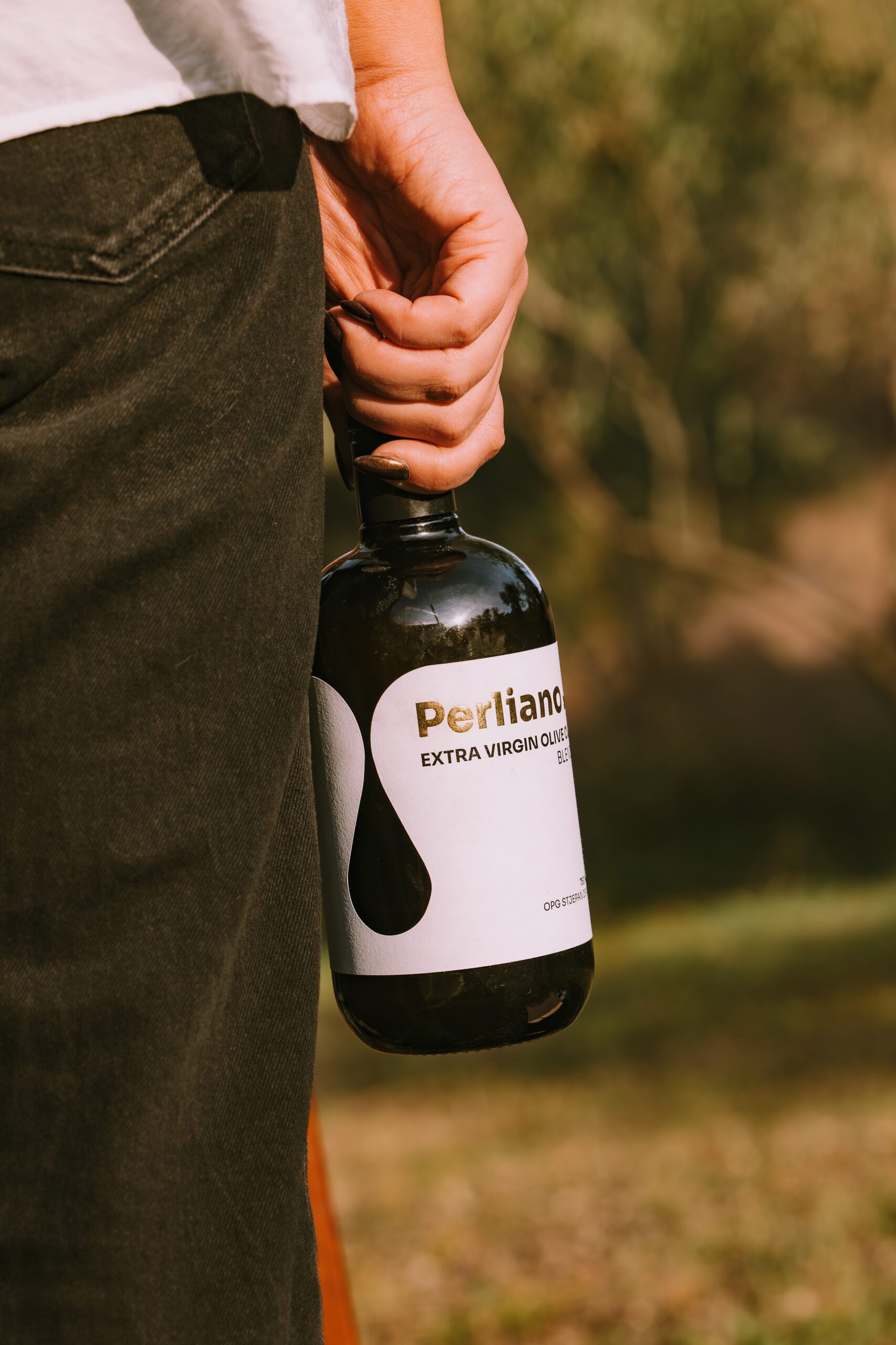
- Perliano olive oil sold out within its first season.
- Čajanka tea is now stocked in restaurants and boutique hotels.
- Mons & Miel has increased its prices by 39% since launch.
In food and beverage, skincare and wellness or pet products? Each category has its own special flavour of curveball. Pick your poison.
FAQ
What does a CPG packaging designer do? A CPG packaging designer creates the brand identity and packaging for consumer packaged goods: food, drinks, skincare, supplements, pet products. A good one also prepares production files, checks them against printer and co-packer specs and manages proofs, so what turns up matches what you approved.
When should a funded startup hire a packaging designer? As soon as the round closes. Ideally three to four months before you need finished stock, because strategy, compliance and printer lead times take longer than the design does.
Can I use ChatGPT or AI to design my packaging? For testing ideas and demand, sure. For final packaging, you need a person checking labelling compliance, dielines, print specs and trademark conflicts. AI won’t notice your net weight doesn’t match what you sold.
What’s the biggest packaging mistake funded founders make? Treating packaging as a design job instead of a production job. The expensive mistakes come from mismatched specs, non-compliant labels and late printer bookings. Almost never from the logo.
How much does a CPG packaging designer cost? Depends on scope, channels and how many SKUs you’ve got. Studio Stoked pricing is on the services page.
Does Studio Stoked work outside Europe? Yes. Studio Stoked is based in Zadar, Croatia, and works with founders in the US, Canada, the UK, Europe and Australia, managing printers and suppliers wherever they happen to be.
Before you approve anything
If you’ve just raised and your first proper production run is coming, talk to someone who reads the label, not just the logo. I work with one client at a time, so the calendar does fill up.
Book a discovery call, or have a nose around how I work first. Bring your dieline, your launch date and your worst-case scenario.
I’ve probably seen it. I’ve definitely seen worse.
+ view the comments